By Sarah Terzo
*****This article originally appeared on Sarah Terzo’s Substack. You can read more of her articles here.
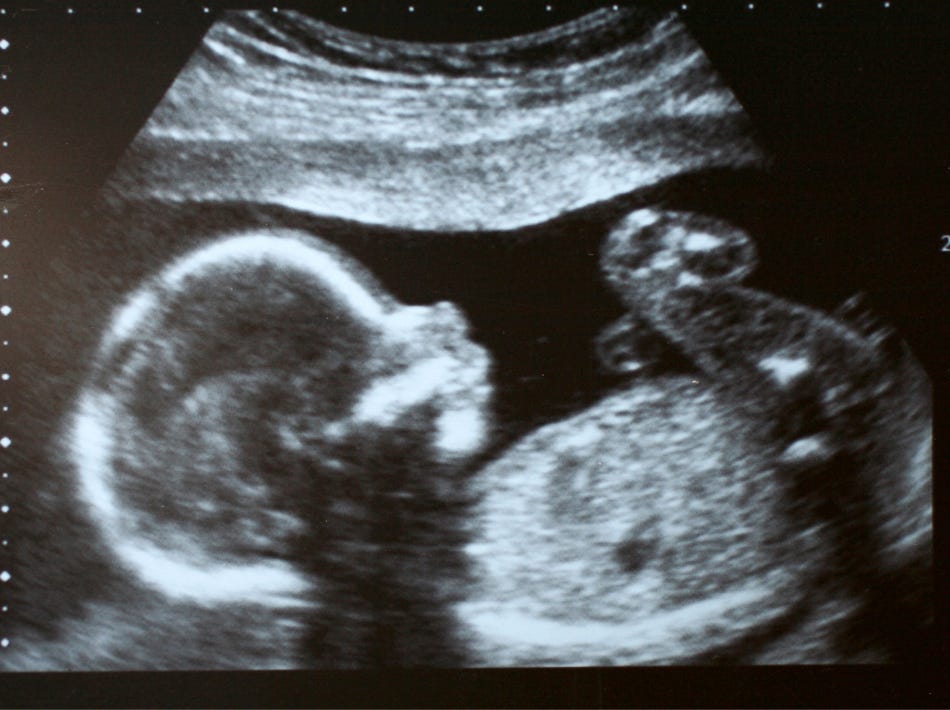
She was warned not to show the ultrasound or give facts about fetal development.
In her 2024 book, British midwife Juno Carey wrote about the training she received when she started working at an abortion facility.
Instructed Not to Talk About the Baby
When working as a midwife, Carey always showed the ultrasound screen to pregnant people and described their babies to them.
At the abortion facility, however, she was ordered to turn the screen away, and not to give any information about the baby. Carey writes:
When a woman is undergoing an ultrasound scan, ‘Don’t comment on what you are seeing, unless they ask you,’ I was told by the supervising practitioner. Beyond telling patients whether they are under ten weeks pregnant – when you can abort medically with pills at home – I learnt to ask women how much they wanted to see and know.1
Carey writes that abortion workers hid the screen and gave no information about fetal development because they “trusted” the women:
These women are grown-ups – for the most part – and they can decide for themselves how they want to approach their situation. It is about trusting the patients and asking for their trust in return.2
If the abortion workers truly trusted women, they would trust them with the truth. They would give them as much information as possible so they could make an informed decision.
Some People Coming in for Abortions are Still Undecided
Throughout the book, Carey insists that people seeking abortions at her facility weren’t pressured to have them. The counseling, she says, was meant to help them decide what they really wanted, not convince them what to do.
However, she also notes that 95% of pregnant people went through with their abortions after their “consultation” with her or another abortion worker. Only 5% decided to choose life for their babies and leave.3
Are all pregnant people who come to abortion facilities sure they want abortions, or are some still making up their minds? Two American surveys suggest that many, if not most, are uncertain.
According to a survey published in David Reardon’s book Aborted Women: Silent No More, 40 to 60% of respondents were undecided about whether to have an abortion when they showed up at the facility.
Reardon’s sample was drawn primarily from women who regretted their abortions, so these numbers may not be generalizable to all people having abortions.
More compelling evidence comes from an older study in the Journal of Biological Science that was cited in a 1996 textbook called Pregnancy and Abortion Counseling. This book was used to train abortion workers.
According to the book (and the study), only 48% of women who came to abortion facilities were sure they wanted an abortion. Thirty-two percent were ambivalent, and 20% “were unprepared to make a decision and needed more time.”4
The textbook concludes “This leaves an estimated 52% that could benefit from counseling.”5
Admittedly, this is an older reference. It’s possible that pregnant people are more certain of their decision now. Only so much can be determined from a study conducted four decades ago.
But a textbook intended to train new abortion providers found the study credible enough, at the time, to make reference to it, and instruct abortion providers accordingly. So it’s something worth paying attention to.
Is it Better for Her Not to Know?
When a pregnant person doesn’t want to see an ultrasound or know anything about fetal development, is withholding this information in her best interest?
No, because if she aborts in total ignorance, she is set up for post-abortion trauma later in life.
Carey won’t be there to censor information for the post-abortive person going forward. There won’t be anyone to prevent her from seeing an ultrasound or learning fetal development information weeks or months or years later.
When she does learn the truth, it’s too late. Once the abortion is done, there’s no going back. It is far better to know the truth—the whole truth—before the decision is made than to find out later when it’s too late to change anything.
Many post-abortive people will go on to have children later in life. They will see the new, wanted baby on the ultrasound screen. And if they’ve had a previous abortion, this can be highly traumatizing. Especially when they are caught completely unprepared.
Ultrasound Leads to Post-Abortion Trauma
Therapist Ellie Shumaker, who works with post-abortive people, wrote about one woman, who she calls Kim. Kim had already been through a healing program for a past abortion. She had named her aborted baby Becky, mourned her deeply, and thought she was healed from the trauma.
Years after her abortion, Kim was happily married and expecting another baby. To her and her new husband, the future looked bright. They were looking forward to welcoming their new son or daughter into the world.
But Kim showed up at Shumaker’s office, sobbing, after the first ultrasound of her much-wanted child.
Shumaker quotes Kim:
I was feeling fine. I’d gotten up on the table and they put this thick jelly stuff on my belly and then ran this machine over me. It didn’t hurt… But then that picture came on and wow… It was bad. That feeling took over me, took me by surprise.6
Kim then described the feeling in more detail:
When I first looked at that screen, some kind of a jolt went through me, and not a good jolt. Like a stab. Like sad and kind of anxious too. And that feeling keeps coming back, when I don’t want it too [sic]. This should be the happiest time in my life, finally married to Charles, finally pregnant. I wish like anything that I could be one hundred percent happy but I’m not.7
Kim was filled with doubts about her ability to be a mother, and guilt over Becky’s death.
Kim said, “I wasn’t much of a mother to that baby. What makes me think I can be a good mother to this one? … I don’t deserve to have this baby.”8
Instead of having a happy, positive experience with her loving husband, greeting her new and much-loved baby and joyfully seeing him for the first time, Kim was traumatized and questioning her ability to be a good mother. What should’ve been a happy experience, a milestone in a much-wanted pregnancy, turned out to be an ordeal. Instead of celebrating, Kim was mourning.
And this was someone who had already gone through an abortion healing program and thought she’d come to peace with the loss of her first baby. One can only imagine the shock and distress of a pregnant person who’s never undergone any healing at all.
Kim had to work very hard in therapy to overcome her intense emotions.
Carey’s abortion facility is setting people up for this kind of trauma. Abortion workers may be ensuring that more people go through with their abortions. But these post-abortive people leave without fully understanding the ramifications of their choice.
When they do find out the truth, neither Carey nor anyone else from the abortion facility will be there to help them cope.
Footnotes
1. Juno Carey A Necessary Kindness: Stories from the Frontline of Abortion Care (London: Atlantic Books, 2024) 31
2. Ibid.
3. Ibid., 101
4. MJ Hare and J. Hayward “Counselling of women seeking abortion” Journal of Biological Science (1981) 13: 269-271
5. Joanna Brien, Ida Fairbairn Pregnancy and Abortion Counseling (London: Routledge, 1996) 55
6. Ellie Shumaker Frozen Tears: 15 Stories of Blindness Before and Hope After Abortion (2019) Kindle edition
7. Ibid.
8. Ibid.
Sarah Terzo covered the abortion issue for over 13 years as a professional journalist. In this capacity, she has written nearly a thousand articles about abortion and read over 900 books on the topic. She has been researching and writing about abortion since attending The College of New Jersey (class of 1997) where she minored in Women’s Studies.
 The Whole Life Democrat